Meaning of Climate Change
Climate change is the long-term alteration of global weather patterns and temperatures. While natural factors play a role, the current rapid change is overwhelmingly driven by human activities, chiefly the burning of fossil fuels like coal and oil. This combustion releases greenhouse gases, such as carbon dioxide and methane, which trap heat in the atmosphere. This enhanced greenhouse effect leads to a warming planet. Consequences include rising sea levels from melting ice sheets, more frequent and severe extreme weather events, and shifts in wildlife populations and habitats. Addressing this urgent global challenge requires a fundamental transition to clean energy and sustainable practices worldwide.
Green House Effect and Green House Gases
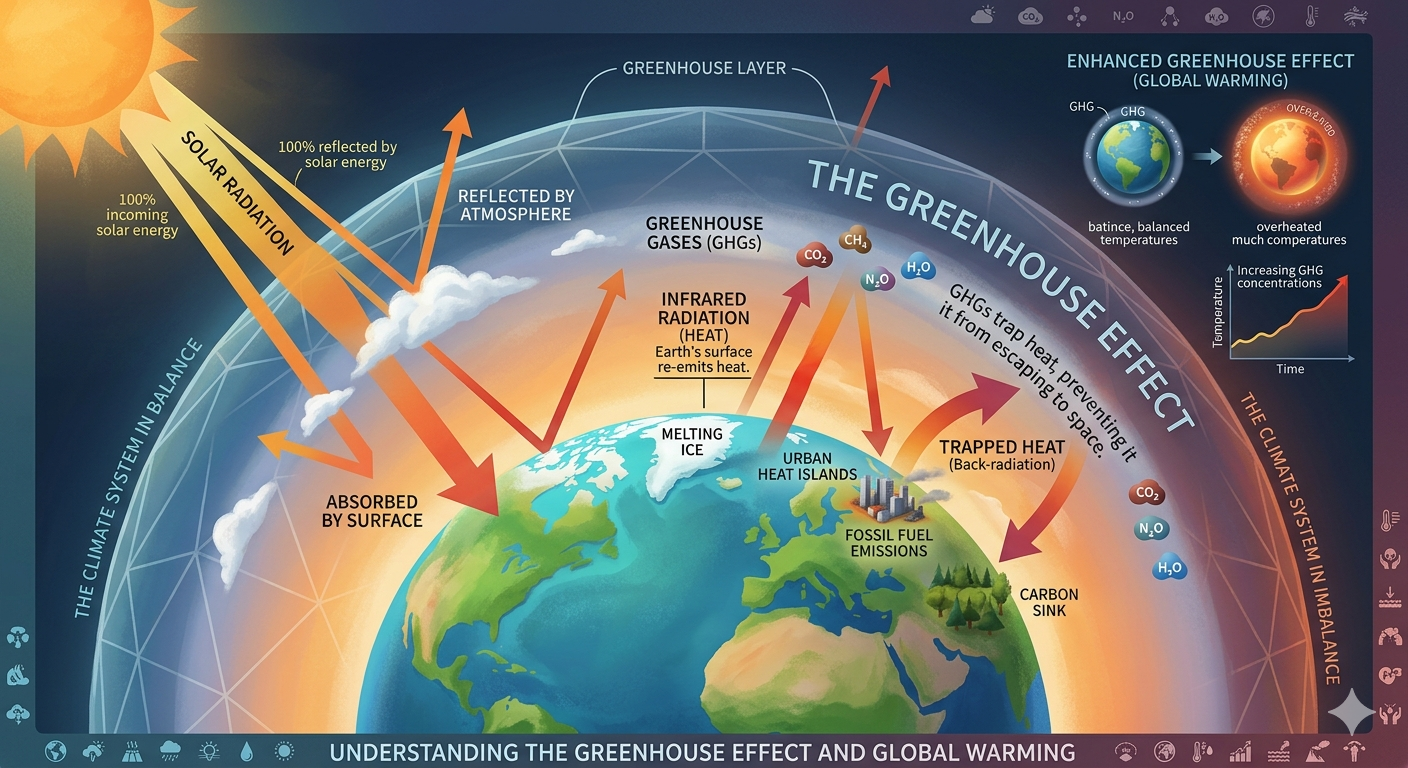
The greenhouse effect is a natural and essential process that warms the Earth. When the sun’s energy reaches our atmosphere, some is reflected back into space, but the rest is absorbed and then re-radiated by the land and oceans as heat. This heat, in the form of infrared radiation, would naturally escape back into space. However, a layer of gases in the atmosphere, known as greenhouse gases, traps some of this heat, much like the glass panels of a greenhouse. These gases—primarily water vapor, carbon dioxide (CO2), methane, and nitrous oxide—act as a blanket, keeping our planet at an average temperature of about 15°C (59°F), which is hospitable for life. Without this natural effect, Earth would be a frozen, uninhabitable world.
The problem arises from human activities that have significantly thickened this insulating blanket. Since the Industrial Revolution, activities like burning fossil fuels (coal, oil, and natural gas) for energy, deforestation, and agriculture have released vast amounts of additional greenhouse gases, particularly CO2 and methane. This enhanced greenhouse effect traps an excessive amount of heat, leading to a rapid increase in global temperatures—the primary driver of the climate change we are experiencing today.
Source of Green House Gases
The sources of greenhouse gases in Earth’s atmosphere are a combination of natural processes and, more significantly in recent history, human activities. Naturally, greenhouse gases are emitted through events like volcanic eruptions, which release carbon dioxide and sulfur dioxide; the decomposition of organic matter in wetlands, which produces methane; and even the respiration of living organisms, which emits CO2.
However, the dramatic increase in greenhouse gas concentrations since the Industrial Revolution is overwhelmingly due to human actions. The largest contributor is the burning of fossil fuels—coal, oil, and natural gas—for electricity generation, heating, and powering vehicles. This process releases vast quantities of carbon dioxide, the primary long-lived greenhouse gas.
Agriculture is another major source. Livestock, particularly cattle, produce significant methane through their digestive processes. Additionally, using nitrogen-based fertilizers in soil releases nitrous oxide. Agricultural practices like rice cultivation also create methane-rich conditions.
Deforestation and land-use changes compound the problem. Forests act as vital “carbon sinks,” absorbing CO2 from the atmosphere. When they are cleared for agriculture or urban development, this absorption capacity is lost, and the stored carbon is often released back into the atmosphere.
Finally, industrial processes and waste management contribute. Certain industrial activities, like cement production, release CO2 as a chemical byproduct. Landfills generate methane as organic waste decomposes without oxygen, and refrigeration systems have historically used potent synthetic greenhouse gases.
Possible Consequences of Global Warming
The consequences of global warming are profound, far-reaching, and increasingly visible across the planet. The most direct impact is the rise in global average temperatures, which triggers a cascade of other effects.
One major consequence is the melting of cryosphere—polar ice caps, glaciers, and permafrost. This contributes directly to rising sea levels, threatening coastal communities and low-lying island nations with inundation, erosion, and saltwater intrusion into freshwater sources. The loss of glaciers also endangers freshwater supplies for millions who depend on seasonal meltwater.
Global warming intensifies the water cycle, leading to more extreme and erratic weather patterns. Many regions experience more severe and prolonged droughts and heatwaves, while others face catastrophic floods and more powerful tropical storms and hurricanes. These events cause devastating human and economic losses, destroy infrastructure, and disrupt agriculture.
Ecosystems are under immense stress. Warming temperatures force many plant and animal species to migrate toward cooler areas or face extinction. Ocean warming and acidification, caused by absorbed CO2, lead to widespread coral bleaching, devastating these biodiverse habitats and the fisheries they support.
These environmental shifts have direct consequences for humanity. Agricultural yields are threatened by changing weather patterns, pests, and water scarcity, jeopardizing food security. Human health suffers from increased heat-related illnesses, the spread of infectious diseases, and respiratory problems from worsened air pollution. Ultimately, these combined pressures can exacerbate resource scarcity, drive displacement and migration, and heighten the risk of conflicts, creating a global challenge that demands urgent and comprehensive action.
What could we expect in the next 10 years
Over the next 10 years, we can expect the impacts of global warming to intensify significantly. Global temperatures are likely to surpass the 1.5°C threshold above pre-industrial levels within this decade . This will lead to more frequent and severe extreme weather events, including deadly heatwaves, prolonged droughts, intense wildfires, and powerful floods .
Extreme weather is projected to be the most severe long-term risk, with developing countries being disproportionately affected due to their limited capacity to cope . We will also see continued sea-level rise and disruptions to critical infrastructure, including water and energy systems . Precipitation patterns will become more erratic, threatening agricultural production and food security worldwide .
International Forums & Organisations
Several key international organizations are dedicated to curbing global warming through policy, science, and finance. The primary framework is the United Nations Framework Convention on Climate Change (UNFCCC) , under which nations negotiate agreements like the legally-binding Paris Agreement, aiming to limit global warming to 1.5°C . Informing these policies is the Intergovernmental Panel on Climate Change (IPCC) , a UN body that provides comprehensive scientific assessments on climate change .
Specialized UN agencies like the UN Environment Programme (UNEP) and the World Meteorological Organization (WMO) work on the ground, supporting countries with science, policy, and mitigation projects . Financially, the Green Climate Fund (GCF) channels funding from developed to developing countries for climate action . Other influential bodies include the International Renewable Energy Agency (IRENA) , which promotes clean energy transitions .
Measures to Prevent Global Warming
Addressing global warming requires a comprehensive, multi-pronged approach involving individuals, communities, industries, and governments worldwide. The primary goal is to drastically reduce greenhouse gas emissions and transition to a sustainable, low-carbon future.
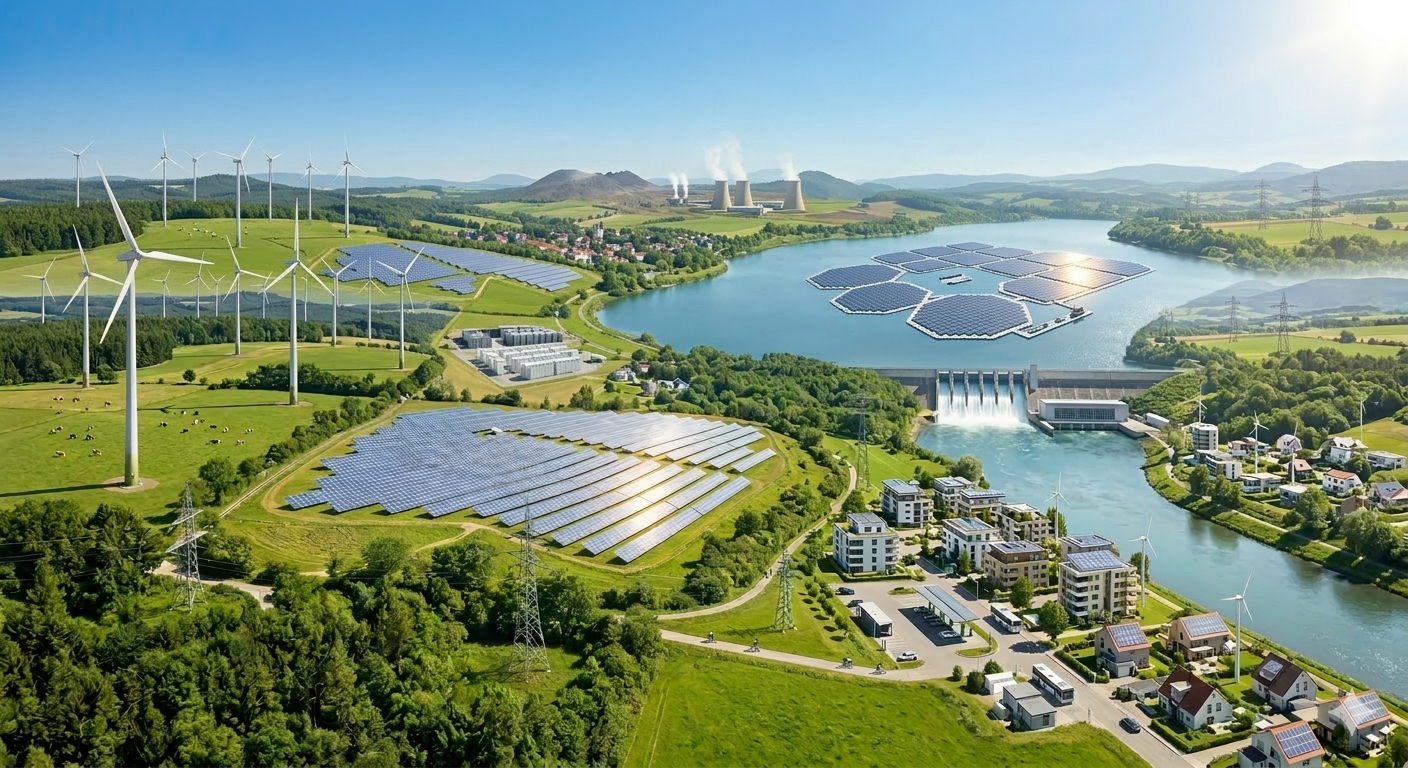
The most critical measure is the global energy transition. This involves shifting from fossil fuels to renewable energy sources like solar, wind, geothermal, and hydroelectric power for electricity generation. Simultaneously, we must dramatically improve energy efficiency in buildings, appliances, and industrial processes to reduce overall consumption.
Transforming the transportation sector is equally vital. This means accelerating the adoption of electric vehicles (EVs) powered by clean energy, expanding and improving public transit systems, and promoting active transport like cycling and walking. For freight, exploring alternative fuels and more efficient logistics is key.
In agriculture and industry, sustainable practices are essential. This includes reducing food waste, adopting regenerative agricultural techniques that store carbon in the soil, managing livestock emissions, and using fertilizers more efficiently. Industries can innovate by using low-carbon materials, improving manufacturing processes, and capturing carbon emissions at the source.
Protecting and restoring natural ecosystems is a powerful natural solution. Forests, wetlands, and oceans are vital carbon sinks. Halting deforestation, embarking on large-scale reforestation and afforestation projects, and restoring degraded lands enhance the planet’s own capacity to absorb CO2.
On a broader scale, governments must implement supportive policies like carbon pricing (putting a price on emissions), stricter emission regulations, and investments in green technology research. Finally, adapting to the changes already underway is necessary, which includes building resilient infrastructure, developing drought-resistant crops, and protecting coastal communities from sea-level rise. Individual actions, from reducing consumption to conserving energy at home, collectively contribute to this global effort.